Rigging by the numbers: slings, shackles and the working load limit
What a working load limit means, how sling angle changes it, and the daily inspection the federal rule expects before a lift.

The number that decides every lift
Every lift you make comes down to one number. It is stamped on the shackle, printed on the sling tag, or molded into the hook. That number is the working load limit, and it tells you the maximum load a piece of rigging hardware can carry under ordinary conditions. We stock 162 parts across our catalogue that state a load rating in pounds, and every one of them carries this figure for a reason. When you are about to spend money on rigging gear, the WLL is the specification that matters more than any other.
The working load limit is not the breaking strength. It is not the weight at which the part snaps in two. It is a conservative figure set by the manufacturer or by an engineering standard, and it accounts for the way the equipment behaves in real use. A shackle pulled straight along its axis can handle more than one loaded at an angle. A wire rope sling bent around a sharp corner carries less than one running over a round beam.
The WLL already builds in a margin for these conditions. OSHA 29 CFR 1910.184 covers slings specifically, and we read that standard when we evaluate what we supply. It tells us how to rate slings for different hitch types and load angles. The same principle applies to shackles, hooks, and eye bolts: the rated capacity assumes you are using the equipment as it was designed to be used.
We check the stated load on every part we carry against what is printed on the hardware itself. If the catalogue says 4,000 pounds but the shackle on our desk is marked 3,200 pounds, we do not list the higher number. We list what is actually there. This matters because the difference between a 3-ton lift and a 5-ton lift is the difference between a safe job and a failed one.
Working load limit, breaking strength and the difference
Every shackle and sling we stock has two numbers stamped into it or printed on the tag. One is the Working Load Limit, or WLL. The other is the Breaking Strength. They are not the same thing. Mixing them up on a jobsite can hurt someone.
The Breaking Strength is what it sounds like: the load at which a part fails completely. A laboratory pulls on it until something snaps or deforms past recovery. That number tells you where the absolute ceiling sits. You never want to operate near it.
The Working Load Limit is the number you actually use for planning your lift. It is a fraction of the breaking strength. Industry standards require that fraction to leave room for dynamic forces, wear, and the fact that real-world conditions are messier than a test bench. OSHA 1910.184, which covers slings specifically, sets a minimum design factor of 5 for alloy steel chain slings. That means if a sling assembly breaks at 10,000 pounds, its rated WLL should be no higher than 2,000 pounds. Wire rope runs at a 5-to-1 ratio as well. Synthetic web slings use different factors depending on the material, but the principle stays the same.
We read those specifications before we add a part in our Material Handling department. When a shackle claims a working load limit, we check that the claim lines up with what reputable standards expect from the material and the dimensions. If the math does not add up, we do not carry it. We have 142 parts across rigging and handling, and 162 of our cards state a load rating in pounds because we know you need that number before you commit to a purchase.
The practical rule for anyone spending money today is simple. Plan every lift around the WLL, never the breaking strength. Check that the WLL exceeds the weight of your actual load with margin to spare. Account for the angle of the sling legs, since tension rises sharply as the angle between them widens. And when you inspect your gear, remember that corrosion, cuts, and bent fittings eat into that safety buffer. The breaking strength does not change much on paper, but the safe working load drops the moment the part is no longer in factory condition.
Rated capacity or working load limit is the maximum working load permitted by the provisions of this sectionU.S. Occupational Safety and Health Administration, 1910.184 - Slings, read 21 August 2026
Sling angle: the factor people forget
Here is the thing that trips people up most often when we read through sling specifications. The rated working load limit on the tag assumes the sling legs are pulling straight up, at a vertical angle. That is a clean 90 degrees from horizontal. In that position, each leg carries exactly its share of the load. If you lift one thousand pounds with two vertical legs, each one feels five hundred pounds.
The moment you spread those legs out to fit around a wide load, the geometry works against you. The tension in each leg climbs faster than most people expect. At a 60-degree angle from horizontal, which looks reasonable on the job site, each leg carries about 58 percent of the total weight rather than 50 percent. You have not added any weight to the hook, but you have asked the sling to work harder.
Drop the angle to 45 degrees and each leg now shoulders roughly 71 percent of the load. At 30 degrees from horizontal, every single leg is carrying the full weight of the load by itself. A two-leg sling at a shallow 30-degree angle is doing the same work as a single vertical strap. This is why OSHA 1910.184 tells us to consider the sling angle when we select rigging for a lift. We keep that standard on our desk because it matters in practice.
We stock slings across our Material Handling department with stated working loads ranging into the thousands of pounds. Those numbers are real, and we verify what is printed against the specification before we list them. But they only protect you if you account for the angle at which you will actually lift. When you shop for your next sling, look at the width of the loads you handle most often. Do the math on the leg angle before you commit to a rating. It costs nothing to check, and it keeps the numbers on your side when the load leaves the ground.
Slings that are damaged or defective shall not be usedU.S. Occupational Safety and Health Administration, 1910.184 - Slings, read 21 August 2026
Chain, wire rope, webbing and round slings
The four main sling types each behave differently under load, and picking the wrong one costs more than money. We stock all of them across our Material Handling department, so you can match the material to the job without guessing.
Chain slings take the hardest abuse. They resist cutting, handle high heat, and tolerate rough surfaces that would shred anything else. Alloy steel is the standard material here. The tradeoff is weight. A chain sling is heavy to carry and stiff to rig around shaped loads. If you are lifting something with sharp edges or working near heat, chain is usually the right call. Just inspect the links before every shift. A stretched link or a twist in the assembly means it comes out of service.
Wire rope slings sit between chain and webbing for most everyday work. They are lighter than chain, more flexible, and they handle moderate abrasion well. The core matters. Steel core wire rope holds its shape under heavy compression, like when it runs over a sharp edge or sits in a tight choke. Fiber core is more flexible but crushes easier. Check the termination. Swaged sleeves and mechanical splices have different strength ratings than hand-tucked eyes. Read the tag.
Webbing slings are flat nylon or polyester straps. They conform to irregular loads, they will not mar a finished surface, and they are light enough to carry in one hand. The downside is vulnerability. Abrasion from concrete edges, chemicals in the wash bay, or heat above two hundred degrees will weaken them fast. Store them out of sunlight when you are not using them. UV damage is real and it does not always show as fading.
Round slings look like a soft rope looped inside a sleeve. They are polyester fiber wrapped in a tubular cover. The cover takes the abrasion while the core carries the load. They bend tightly around small-diameter objects without losing much capacity, which makes them handy for machinery with odd lifting points. They cost more per foot than webbing, but they last longer in applications where the sling wraps repeatedly around corners.
Shackles, hooks and matching the weakest part
A shackle is only as strong as the pin you put in it. We see people swap a bolt from their bin into a rated shackle and assume the rating still holds. It does not. The working load limit on the stamp applies to the assembly as it left the maker. Replace the pin with something softer or smaller, and you have invented a new, weaker part with no published number to guide you. If you need a different pin, buy a shackle that comes with it.
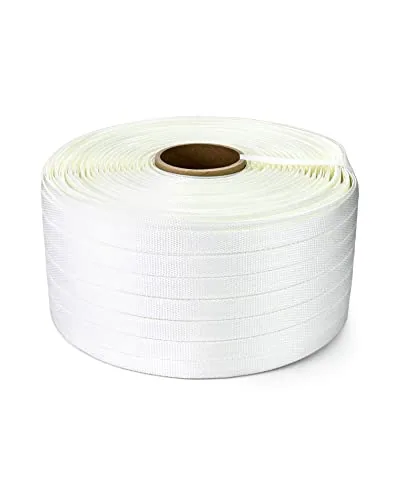
Hooks follow the same rule. The throat opening has to fit what you lift, but it also has to stay closed under load. A latch adds safety when the load shifts. Without one, you are betting that nothing will bump the hook sideways while it carries weight. We stock both styles because shops use them for different jobs. Just match the hook's rating to the sling or chain it attaches to.
This brings us to the part that matters most. Every rigging assembly fails at its weakest point. A half-ton shackle connected to a quarter-ton hook will lift only a quarter ton before something gives. The stronger piece does not add capacity. It just waits while the weaker one reaches its limit. You can calculate this for each connection in your setup: shackle to hook, hook to sling, sling to anchor. Write down the lowest number you find. That is the working load limit for the whole system.
We check the ratings on the parts we supply against the numbers printed on the hardware itself. When a shackle says 4.75 tons, we read the spec sheet and confirm it matches. The 162 parts in our catalogue that state a load in pounds have been verified this way. If we cannot confirm the figure, we do not print it.
OSHA 1910.184 covers slings and requires that you know the working load limit of every component. It does not allow guessing. Before you rig anything, identify the weakest link on paper. Then lift within that number.
Makeshift links or fasteners formed from bolts or rods, or other such attachments, shall not be usedU.S. Occupational Safety and Health Administration, 1910.184 - Slings, read 21 August 2026
The inspection the rule asks for before every use
The standard is plain about this. Before you put a sling under load, you look it over. Every time. Not once a week, not when you remember, but before each lift. The rule exists because slings fail in ways you can see if you pay attention. What you cannot see, you manage by staying within the working load limit and retiring the equipment on schedule. But the visual inspection catches most of what goes wrong in daily use.
Start with the tags. If the tag is missing or illegible, you do not use that sling. The tag carries the working load limit for the hitch you intend to use, and without it you are guessing. We have seen plenty of hardware come through our material handling department where the stamp is faint or gone. Those pieces stay out of rotation until someone who can rate them puts a new tag on.
Run your hands along the full length of each leg. You are feeling for kinks, crushed areas, and spots where the wire or fiber has been abraded down to the core. A wire rope sling with three broken wires in one lay or one broken wire at a fitting gets pulled. Synthetic webbing with any cut that goes deeper than the surface weave is done.
Look at the fittings too. The eyes should be round, not stretched into egg shapes. Hooks that will not close all the way because the latch is bent or the throat has opened up need to go to a bench for repair or disposal. None of this takes long. Two minutes on the floor before the lift starts.
We source shackles, hooks, and slings across alloy steel, stainless steel, and synthetic materials, and we check the stated load ratings against what we receive. But the inspection that matters most happens on your end, right before the hook goes on the load. That check protects the person standing near the lift more than anything printed on a spec sheet does. Keep the sling if it passes. Set it aside if it does not. There is no middle option worth taking.
Each day before being used, the sling and all fastenings and attachments shall be inspected for damage or defects by a competent person designated by the employerU.S. Occupational Safety and Health Administration, 1910.184 - Slings, read 21 August 2026
Periodic inspection and the record behind it
Every sling you use needs someone to look at it on a regular schedule. That is not advice we made up. OSHA 29 CFR 1910.184 requires it, and for good reason. A wire rope that has been in service for six months can hide damage you will not spot until you run your fingers along the length. Synthetic webbing picks up cuts from sharp edges long before those cuts show up as a tear. The inspection catches what a quick glance before the lift will miss.
We check the slings and shackles we source against the load rating printed on them before we list them. You should do the same thing on your end, but more often. Pull the sling out of service. Lay it flat where you have enough light to see the full surface. Look for broken wires in the rope, worn spots on the webbing, corrosion on the hooks, and any distortion in the fittings. If a shackle will not close smoothly or if the pin sticks, set it aside. These are not things you fix in the field.
Write down what you find. The regulation does not tell you which form to use, so a notebook works fine if you keep it consistent. Record the date, who did the check, and the condition of each piece. Note any damage even if you decide the part is safe to put back into rotation. When an inspector walks onto your site, they will ask for this record. A sling without documented inspections is a sling they can red-tag on the spot, and then you are waiting for replacement stock while the job sits still.
Our Material Handling department stocks 142 parts across shackles, hooks, and lifting accessories. Most of them state a working load in pounds because we print what the manufacturer stamps on the hardware. We do not guess at ratings. When you order from us, you get the number that was on the part when it left the factory, and we verify it is still there when it reaches our hands. Keep your inspection log current. It protects the people under the load, and it protects the money you spent on gear that ought to last.
Such inspections shall in no event be at intervals greater than once every 12 monthsU.S. Occupational Safety and Health Administration, 1910.184 - Slings, read 21 August 2026
Rejecting a sling: what damage looks like
A sling that has been damaged does not get a second chance. We know this because we read the specification on every line before it goes into our catalogue, and we have read OSHA 1910.184 in full. The standard is clear about what removes a sling from service. You should be just as strict.
Start with the eyes. Look for cuts, tears, or abrasions that expose the inner core of the material. On a wire rope sling, that means broken wires. If you count three or more broken wires in one lay, or if the wire rope is kinked, crushed, or has birdcaging where the strands have separated, set it aside. A single broken wire near a fitting or an end attachment counts as damage too. We do not sell slings with those defects, and you should not use one that developed them after it left the pack.
For web slings and round slings made from synthetic fibers, check for chemical burns. Acid or caustic contact will soften the fibers and change their appearance even when the surface looks intact. Run your hand along the length. Any area that feels stiff, hard, or sticky has taken heat damage. Melting or charring is obvious once you see it, but the stiffness can hide in a fold.
Look at the fittings. Cracks, severe corrosion, or distortion in the hook throat opening mean the fitting has been overloaded. If you cannot read the identification tag, you cannot verify the working load limit. Without that number, the sling is scrap. End fittings should move freely but not be loose enough to wobble. A fitting that has stretched or bent took a load it was not rated for.
We supply 122 parts across our Material Handling department, and every sling we list carries a stated load rating in pounds. That number only applies to equipment in good condition. When you inspect, trust what you see over what you hope is still true. Cut the sling in half so nobody else uses it by mistake. Then order a replacement.

Hand trucks, dollies and moving weight without a crane
Not every load calls for a crane. Most of the moving that happens in a shop, on a loading dock, or across a warehouse floor gets done with a hand truck, a platform dolly, or a good pair of wheels under a flatbed cart. We keep 122 parts in our Material Handling department for exactly this kind of work, and the prices run from six dollars up to about ninety-seven, with most choices sitting around twenty-two.
The number you care about is the capacity rating in pounds. We publish that figure for every unit where the manufacturer states it clearly. If it is not on the specification sheet, we do not guess. You will find 162 parts across our catalogue that carry a stated load rating, and we treat that number as a hard limit, not a suggestion. A hand truck rated for six hundred pounds will move six hundred pounds. It will not move eight hundred safely, no matter how carefully you stack the boxes.
Wheel choice matters more than most people expect until they try to push a fully loaded dolly over a cracked concrete floor. Solid rubber rolls well on smooth surfaces but transmits every jolt to your arms. Pneumatic tires absorb vibration, which helps when you are crossing thresholds or working outdoors on asphalt. Check the deck dimensions before you buy. We print the length and width when we have them from the manufacturer. 264 of our parts include full measurements. If you need to fit a specific pallet or a piece of machinery, those numbers decide whether the dolly works or whether it sits in the corner.
Buying rigging in a shop that lifts occasionally
Most shops that lift a few times a month do not need a full rigging kit. They need one or two slings, maybe four shackles, and something to hang them from when the job is done. The temptation is to buy whatever the hardware store carries and call it done. That works until it does not.
We carry 122 parts in Material Handling alone. Across those, prices run from about six dollars to just under ninety-seven, with most items sitting around twenty-two. You can put together a light-duty lifting setup for less than what a single premium shackle costs elsewhere, but only if you match the part to the job.
Start with the working load limit. We publish this figure in pounds for every rigging item where it applies, and we print exactly what is stamped on the part. If a shackle says 1 ton, we write 2000 lbs. There is no rounding up in our catalogue because there is no rounding up on a lift. OSHA 29 CFR 1910.184 spells out how to rate synthetic slings by their hitch type, and we follow that language in our product descriptions so you can read the regulation next to the spec sheet.
For occasional use, alloy steel shackles make more sense than stainless unless you work near saltwater or chemicals. Alloy steel handles higher loads at a given size, and it costs less. Our alloy steel hardware starts under ten dollars. Nylon or polyester web slings handle abrasion better than wire rope for shop work where the load might rub against sharp edges, and they are easier to inspect for damage. Check the stitching before each use. If any thread looks worn or pulled, replace it.
Store rigging off the floor and out of direct sunlight. UV light degrades synthetic fibers even when they are not under load. A hook on the wall or a shelf in your storage cabinet keeps slings clean and lets you see damage before you lift with them. We sell storage options across several departments if you need a place to keep things organized.