Lockout and tagout: what the federal rule actually asks of a small shop
What 29 CFR 1910.147 requires, which devices count as energy isolation, and how a two-person shop keeps a written procedure honest.
Why a switch on the front panel is not enough
The toggle switch on a machine's control panel does not isolate the power. It stops the motor or closes a valve, but the wires behind it stay live, and the pressure in the line can sit there waiting. We have seen enough equipment panels to know that "off" on the front often means nothing more than an open contactor coil upstream. The real disconnect is usually at a breaker box thirty feet away, inside a panel nobody opens unless something has already gone wrong.
OSHA 29 CFR 1910.147 is specific about this. The standard requires that you isolate the energy source and lock it so it cannot be re-energized while someone is working on the equipment. A switch you can reach from where you stand does not count as isolation if the power can flow to that switch from another direction, or if the switch itself fails closed. We read the rule carefully when we built our Safety & Lockout department, and the language is not ambiguous about what counts as adequate.
The practical problem is that a front-panel shutoff feels sufficient until the moment it is not. A maintenance worker flips the switch, reaches into the guard, and assumes the machine is dead because the display went dark or the conveyor stopped moving. Meanwhile, a loose connection, a second feed, or a residual charge in a capacitor is still present. Lockout solves this by putting a physical device on the actual energy-isolating mechanism, not on the control circuit. You attach the lock where the power actually enters the machine, verify zero energy state, and then you work.
What the standard covers, and what it leaves alone
The federal lockout/tagout standard applies when your people service or maintain equipment and someone could get hurt if that equipment starts up while they are working on it. That is the whole test. If you have a machine where unexpected energization would injure a worker, the rule covers you. It does not matter whether you run a fabrication shop with fifty employees or a two-person repair garage. The standard does not distinguish by business size.
What it actually governs is the energy source. Electrical circuits fall under it, sure. So do pneumatic lines, hydraulic systems, stored springs, gravity on a raised platform, and steam in a pipe. Any form of energy that can move parts or release pressure counts. We stock lockout devices for breakers, valves, plugs, and pneumatic fittings across sixty-eight SKUs in our safety department because each of those requires a different approach. You cannot padlock a circuit breaker the same way you isolate a ball valve.
What the rule leaves alone is almost as important. It does not cover routine tool changes that are part of normal production cycles. If an operator swaps out a drill bit and the machine cannot start without them pressing a button again, that is generally outside the scope. The standard also does not apply to corded plug-in equipment when you control the plug itself, though you still need a procedure for it. Hot tap operations on pressurized pipelines have their own section of the regulations.
Construction work falls under a different OSHA subpart entirely, so this standard does not reach it. Neither does agricultural equipment, unless a specific employer coverage determination says otherwise. The rule is written around fixed industrial settings: manufacturing floors, wastewater plants, food processing lines, places where the same machines run every day and the same crew services them.
We read the full text of 29 CFR 1910.147 when we decide what goes into our lockout packs. The language in there is specific about what you must document and what devices you must use. It does not ask you to buy everything at once. Most small shops we supply start with breaker lockouts and a few valve hasps, then add cable locks and group lockout boxes as they map out more machines. The median price point in our lockout category sits under twenty-five dollars, which means you can build out a station for one panel without a large capital request.
What matters for compliance is that your procedure matches what your people actually do. A written program that describes steps nobody follows will fail an inspection faster than missing hardware.
This standard covers the servicing and maintenance of machines and equipment in which the unexpected energization or start up of the machines or equipment, or release of stored energy could cause injury to employeesU.S. Occupational Safety and Health Administration, 1910.147 - The control of hazardous energy (lockout/tagout), read 21 August 2026
Energy isolating devices, and what does not count
Not everything that stops a machine counts as an energy isolating device under the federal rule. This distinction matters because if you lock out the wrong thing, you have not actually isolated the energy source. The regulation is specific about what qualifies and what does not, so we want to walk through it clearly before you buy anything.
An energy isolating device is a mechanical device that physically prevents the transmission or release of energy. It has to be capable of being locked out. A manually operated electrical circuit breaker is the classic example. So is a line valve that you can padlock in the closed position. A disconnect switch with a place for a lock. A block you slide into a press mechanism. These devices physically stop the flow of energy, and they stay where you put them until someone moves them.
What does not count surprises people sometimes. Push buttons, selector switches, and other electronic control circuit types are explicitly excluded from the rule. They do not physically isolate energy. They send a signal to something else that might isolate it, but they themselves are just switches on a board. If you lock a control panel door but leave the breaker outside it accessible, you have not locked out the machine. The rule is plain about this: a control device is not an isolating device.
We see shops make this mistake most often with pneumatic equipment. An electronic solenoid valve that shuts off air when the machine powers down is a control device, not an isolating one. To comply, you need a ball valve or gate valve upstream of that solenoid, one that you can close and lock. The same logic applies to hydraulic systems. The lever on the pump console is convenient for operation, but it is not a compliant lockout point unless it mechanically blocks the fluid path and accepts a lock.
Our Safety & Lockout department carries 68 parts for exactly these situations. Valve lockouts start around seven dollars. Breaker lockouts run about the same. Cable lockouts for handles that have no built-in locking point cost a little more, but they let you secure equipment that was never designed with lockout in mind. We test every batch we bring in because a lockout device that slips off a breaker handle or a valve wheel defeats its own purpose.
When you are standing in front of a machine you need to service, the difference between a control device and an actual isolating device is the difference between a procedure on paper and real protection.
Push buttons, selector switches and other control circuit type devices are not energy isolating devicesU.S. Occupational Safety and Health Administration, 1910.147 - The control of hazardous energy (lockout/tagout), read 21 August 2026
Locks, hasps and tags: the hardware in plain terms
The lockout hardware you need breaks down into three pieces. A lock, a hasp, and a tag. Each one does a different job, and you can buy them separately or as a set depending on what your shop already has on hand.
Locks are the core of the system. The rule is straightforward: every person who works on the machine needs their own lock. If two mechanics are servicing the same press, they both attach their own locks to the hasp. That way neither one can re-energize the equipment until the other removes theirs. We carry keyed-different padlocks in our Safety & Lockout department because each person should hold the only key to their own lock. Keyed-alike locks have a place in larger shops where a supervisor carries master keys, but for most small operations, individual keys keep things simple and compliant.
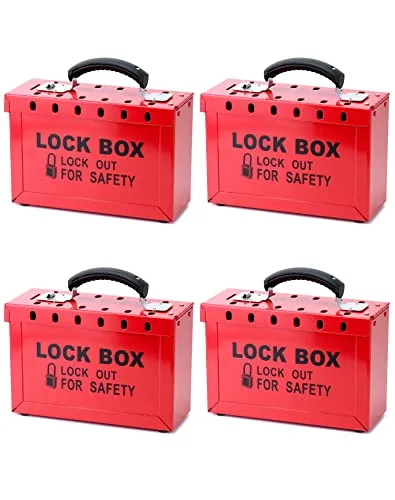
Hasps are the piece that lets multiple locks share one energy isolation point. You slip the hasp through the handle or valve opening, then thread the locks through its holes. Steel hasps hold up better than aluminum on heavy equipment, and we check the shackle thickness against what the manufacturer prints on the part before we add it to our stock.
Tags serve a purpose that metal cannot. They tell people who locked it out, when, and why. OSHA requires tags alongside locks, not instead of them, so do not treat a tag as a substitute. Our tags are made of cardstock or plastic with grommets that fit standard lock shackles. Write clearly with a permanent marker. The tag stays attached until the work is done and everyone who placed a lock has removed it personally.
We stock 68 parts across this department, with individual items running from under seven dollars to around a hundred. Most of what you need falls near twenty-five dollars per unit. Buy enough locks for every person on shift plus a few spares, one hasp per energy isolation point, and twice as many tags as you think you will use. Tags tear and get lost. Locks last longer when you store them dry.
Checkout and fulfillment are handled by our retail partner.
A device that utilizes a positive means such as a lock, either key or combination type, to hold an energy isolating device in a safe positionU.S. Occupational Safety and Health Administration, 1910.147 - The control of hazardous energy (lockout/tagout), read 21 August 2026
Writing a procedure for one machine
Start with the machine you use most. Not the whole shop. One piece of equipment, one written page. The regulation does not ask for a manual that covers every tool at once. It asks for a procedure that a person can follow, step by step, before they put their hands near moving parts.
Stand in front of the machine and trace the power. Where does it come from? Electrical disconnect, air line, steam valve, hydraulic feed. Each energy source needs its own isolation point, and each of those points needs a lockout device that fits it. We carry breakers locks starting under seven dollars and valve lockouts that cover ball valves up to an inch and a half. You will need a tag for every lock, and we sell them in packs because shops go through them.
Write down what you find. Name the machine. List every energy source and exactly where someone cuts it off. Then list what they do next: move the start button to confirm it is dead, block stored pressure if there is any, test before touching anything. The person who wrote the procedure should not be the only one who understands it. Hand it to the second-shift operator and ask if the steps make sense where they stand.
Keep the language plain. "Throw the breaker" is better than "de-energize the electrical supply circuit." A procedure that sits in a binder nobody reads will not protect anyone. Laminate it and wire it to the machine if you have to. We stock cable ties by the thousand for this kind of thing.
You are not writing for an auditor. You are writing for the person who has to walk up to that machine tired on a Friday afternoon and come home with the same number of fingers they started with. Make it that clear.
This section requires employers to establish a program and utilize procedures for affixing appropriate lockout devices or tagout devices to energy isolating devicesU.S. Occupational Safety and Health Administration, 1910.147 - The control of hazardous energy (lockout/tagout), read 21 August 2026
Stored energy: air, springs, hydraulics and gravity
Stored energy is the part of lockout that surprises people. You shut off the power source, you apply your lock, and then a press arm moves on its own. Or a hose whips when you disconnect it. That is stored energy, and the rule says you have to deal with it before anyone reaches into the machine.
Compressed air is the one most shops run into first. A tank or accumulator holds pressure even after you close the supply valve and lock it out. We carry ball valves and bleed fittings in our Pneumatic department for this exact reason. The right fitting lets you open a port slowly so the air escapes without sending debris across the shop. Our pneumatic couplers run from about six dollars up to seventy, and we stock them in both steel and brass depending on what your system uses.
Springs show up in guards, clamps and presses. When you release the tension, the spring wants to snap back to its resting shape. We cannot tell you how much force any particular spring holds just from looking at it, but we can tell you that our clamp selection includes models with visible tension indicators. Those help you confirm at a glance that you have released the load before you work near it.
Hydraulic systems store energy the same way air lines do, except the fluid does not compress much. The pressure sits there until you open a relief valve or bleed port. Gravity is simpler: anything that can fall, will fall if its support moves. We sell blocking material and wedges in our Material Handling section because wood scraps are not reliable enough for this job. A machined block with a flat base costs less than an injury, and ours start under seven dollars.
We keep 68 parts in Safety & Lockout specifically for these procedures. Most of them cost between fifteen and fifty dollars. None of them require special training to use correctly, but all of them require that you actually use them.
Group lockout when more than one person is working
When more than one person needs to work on the same piece of equipment, a single lock is not enough. The rule at 29 CFR 1910.147 is plain on this point: each worker must have their own lock in place before they start, and no one removes anyone else's. This is what inspectors call group lockout, and it applies whenever two or more crews share a machine.
The problem most small shops run into is that standard electrical panels only have room for one or two locks on a single breaker. If three people need to work on that conveyor at once, there are not enough places to attach locks directly to the energy source. You cannot just have everyone sign a single tag and call it done. That does not satisfy the standard.
What works instead is a hasp. A lockout hasp is a steel tab with multiple holes along its length. You slip it through the breaker switch or valve handle, then each worker puts their own padlock through a separate hole. The equipment stays locked as long as any one of those locks remains attached. When the job finishes, each person removes only their own lock. The last person to finish takes theirs off last.
We carry several hasps in our Safety & Lockout department for this exact situation. A basic steel hasp with six holes costs around fifteen dollars. If you need more capacity, we stock versions with up to twelve holes that fit larger panels. Pair these with keyed-different padlocks so each person on your crew carries a unique key that no one else can use. Our lockout kits bundle these parts together if you are setting up a program from scratch.
The real expense here is not the hardware. It is the time you spend explaining why every person on the floor needs to follow this step. Write it into your procedure. Post it where people actually look. The inspector who walks through your door will check whether each person working on a machine can point to their own lock.
Shift changes and the lock that stays on
The lockout rule has a specific requirement about shift changes, and it trips up more small shops than almost any other part of the standard. Here is what OSHA 29 CFR 1910.147 actually says: you may not remove someone else's lock. Not ever. The only person who takes a lock off is the person who put it on.
This sounds obvious until you run a second or third shift. The day crew finishes work and goes home. The night crew arrives and needs that machine back in service. If the day shift's lock is still on it, nobody on the night shift can legally touch it. The regulation is clear on this point. It does not care about your schedule.
What the standard permits instead is a formal transfer procedure. The two workers meet at the equipment. The outgoing employee removes their lock while the incoming employee puts theirs on at the same moment. There is never a gap where the machine sits unlocked but still shut down for service. We have seen shops try to handle this with a logbook or a verbal handoff at the time clock. Those do not satisfy the requirement. The transfer has to happen at the lock itself.
For many small operations, the practical answer is to keep enough locks on hand so every worker carries one. Our Safety & Lockout department runs 68 parts, keyed-different padlocks from under seven dollars on up, plus hasps that let multiple locks sit on a single energy isolation point. When each person on each shift holds their own lock and key, you sidestep the whole transfer problem entirely. Nobody touches a lock they did not install.
Count your shifts. Count the people who might need to lock out any given piece of equipment. Then order enough locks to cover them all. A spare lock costs less than a single OSHA citation, and it eliminates the awkward moment where two people are standing at a control panel trying to figure out whose turn it is to take responsibility for the machine between them.
Inspection, training and the paperwork that follows
The rule does not end once you install the locks. It asks you to inspect them, train the people who use them, and keep records of both. None of this is optional, but it also does not require expensive software or a dedicated compliance officer.
An authorized employee must inspect each lockout device at least once a year. They check that the lock still works, the tag is readable, and the procedure you wrote actually matches what happens on the floor. If they find a problem, they fix it, then document what went wrong and how they corrected it. We carry replacement locks and tags in our Safety & Lockout department for when an inspection turns up worn parts, so you can swap them out before the next shift starts.
Training has two parts. Every employee who works in the area needs to know what a lock or tag means and that they must never remove one that is not theirs. That is awareness training, and it takes maybe twenty minutes. The people who actually apply the devices need more. They have to demonstrate that they can identify every energy source on the equipment, isolate it, lock it out, and verify zero energy state. You keep a written record of who was trained and when. It does not need to be fancy. A dated sign-in sheet with the topics covered will satisfy an inspector if you can produce it.
Paperwork sounds tedious, but it serves a practical purpose. When someone gets hurt or a machine starts up unexpectedly, the first thing OSHA asks for is your written program, your training log, and your inspection records. If you have them, the conversation stays short. We stock binders, clipboards, and job site storage boxes across our Storage & Display and Workshop Supplies lines, so you can keep those papers where they belong: near the equipment they protect.
An energy isolating device is capable of being locked out if it has a hasp or other means of attachment to which, or through which, a lock can be affixed, or it has a locking mechanism built into itU.S. Occupational Safety and Health Administration, 1910.147 - The control of hazardous energy (lockout/tagout), read 21 August 2026
What we sell, and what you still have to do yourself
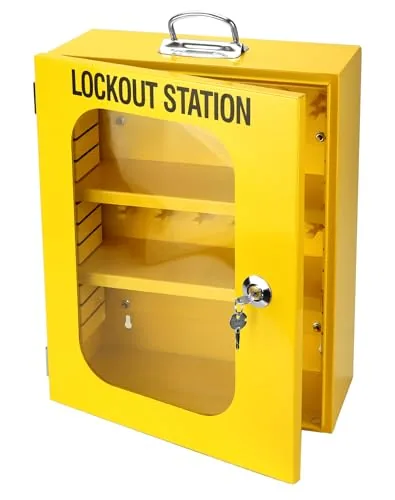
We stock 68 parts in the Safety and Lockout department. They run from just under seven dollars to a little over a hundred, with most of them sitting around twenty-five. You will find padlocks in different colors, hasps that accept multiple locks, tagout tags on rolls or as single cards, and cable lockout devices for those odd-shaped valves that nothing else will reach. We also carry breaker lockouts and valve handle covers. The materials are what you would expect: steel where strength matters, tough nylon or rubber where flexibility does.
That covers the hardware. What it does not cover is the part of the rule that lives on paper and in habit.
You still have to write your energy control procedure. No catalog can do that for you, because every machine in your shop is different. You know which breaker feeds the press and which air line feeds the grinder. We do not. So you list them. You identify every energy source, you write down how you isolate each one, and you keep that document where your people can read it.
You still have to train your crew. A padlock is only useful if the person holding it understands why it goes on before they reach into the machine. OSHA is explicit about this: the standard requires training, and it requires you to certify that the training happened. We supply the locks. You supply the shift meeting.
You still need to inspect your program at least once a year. The regulation calls for an annual review by an authorized employee who is not the one who normally does the work. That person checks whether the procedure still matches the equipment, whether people are actually using their locks, and whether anything has changed since last time. Then you sign off on it.